Healthcare facilities cannot tolerate pests. Patients are immunocompromised, sterile environments are uncompromising, and audits expect full documentation. Our hospital-grade programs combine baiting, physical trapping and exclusion with infection-control aware scheduling and detailed reporting.
Healthcare facilities combine clinical, sterile, food-service, pharmacy and waste environments — each with its own pest risk profile. Patients may be immunocompromised, post-surgical, ventilator-dependent or under infectious-disease precautions. Cockroaches, rodents, ants and flies in this environment are not a nuisance — they are an infection-control issue.
Our programs are designed around the clinical environment first. We prioritise physical trapping and exclusion over chemical treatment in patient-care areas, use hospital-grade products only where appropriate, schedule with infection prevention and control (IPC), and document everything to ACHS, NSQHS and accreditation standards.
Grade products & methods
Priority in patient areas
Coordinated scheduling
Audit-ready reporting
We identify every biological, chemical and physical pest hazard in your operation — from rodent contamination in dry stores to cockroach pathogens in prep areas.
If your business handles, prepares, stores or serves food — or cares for vulnerable people — HACCP-aligned pest control is non-negotiable. We deliver compliant programs to:
Pests in healthcare can act as vectors for healthcare-associated infections (HAIs), contaminate sterile stock and pharmacy, trigger infection-control investigations, and cause distress to patients and families. A single rodent in pharmacy is a notifiable incident.
A documented hospital-grade program supports accreditation, IPC governance and clinical risk management — and protects the most vulnerable patients in the facility.
Cockroaches and flies are mechanical vectors for HAI pathogens. In immunocompromised, post-surgical or ICU patients, a contamination event can have serious clinical consequences.
ACHS, NSQHS and aged-care/private-hospital accreditation expects documented professional pest management. Findings at accreditation can affect facility status and contracts.
Rodent activity in sterile stores or pharmacy triggers immediate quarantine, write-off and notifiable-incident reporting — costs that dwarf the program many times over.
Pest sightings in a clinical environment generate complaints, formal incident reports and reputational damage that affects elective admissions and clinician recruitment.
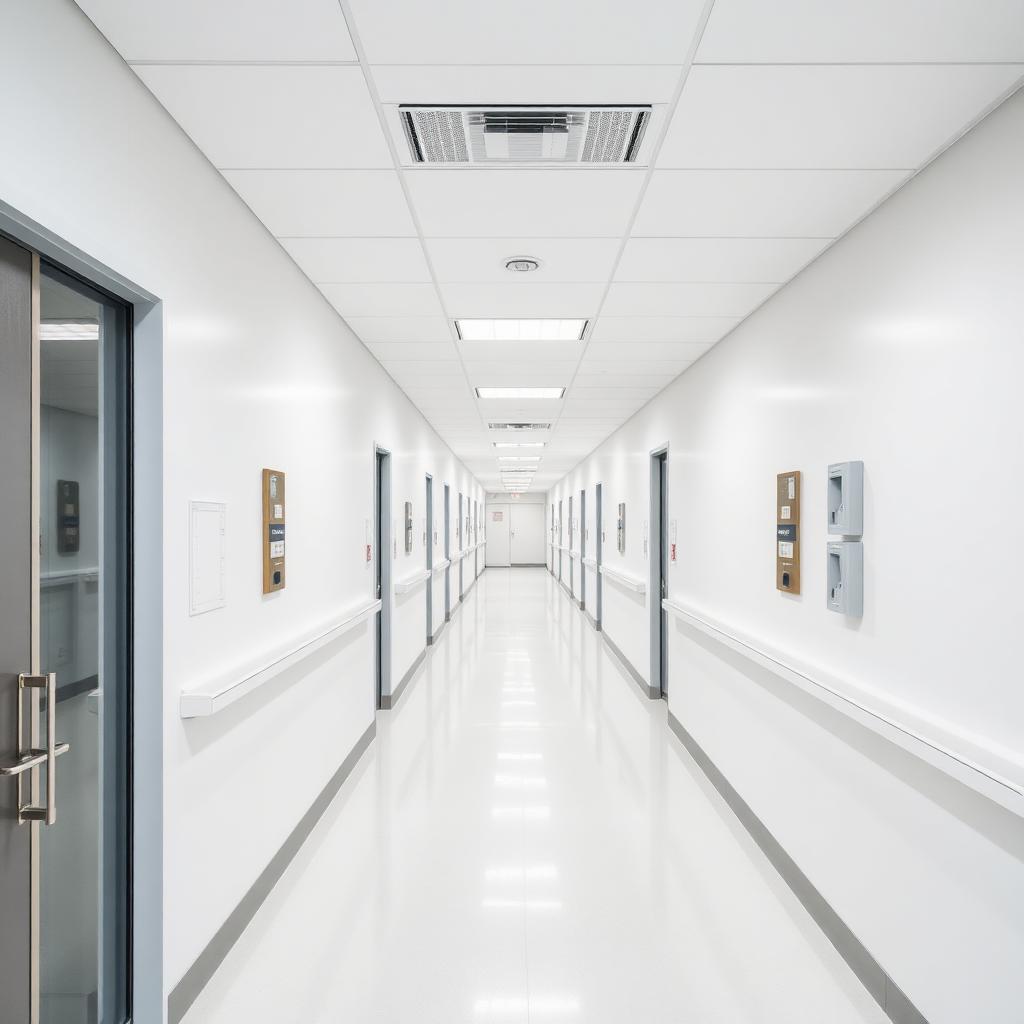
We walk wards, theatres, sterile stores, pharmacy, ward kitchens, central kitchen, linen, laundry, mortuary, loading dock and external perimeter with facilities management and IPC — and produce a written zoned risk map.
In patient-care, sterile and pharmacy areas we use physical trapping, monitoring and exclusion as the first line — chemical treatment only where appropriate, in concealed locations, with full IPC sign-off.
HACCP-aligned cockroach, rodent and ant program in central and ward kitchens, ward serveries, linen, laundry, sluice rooms and bin enclosures — coordinated with food-service and cleaning rosters.
Patient transfer, ED admission or staff report triggers priority callout — inspection, treatment of affected and adjoining areas, mattress and recliner protocol, and clearance documentation for IPC and facility records.
Every visit logged with findings, products, batch numbers, trap and station counts, treatment locations and Safety Data Sheets — formatted for ACHS, NSQHS, IPC and accreditation surveyors.
A Cronulla professional suite, a Caringbah co-working hub and a Sutherland multi-tenant building do not need the same program. We match the inspection, treatment and reporting to how each site operates.
Physical trapping and monitoring only — chemical treatment is the last resort and only with IPC sign-off in concealed locations.
HACCP-aligned cockroach hotspots. Gel baiting and monthly monitoring protect immunocompromised, post-surgical and end-of-life patients.
Rodent activity here is a notifiable incident. Lockable stations and exclusion are mandatory; no chemical treatment without IPC and pharmacy sign-off.
Rodent, fly and bird hotspots — and the most common entry path into the building. Exterior stations and exclusion break the path.
Bed bug, cockroach and ant risk — patient seating and triage areas need routine inspection and discreet treatment outside clinic hours.
Bird-exclusion, rodent stations and ant treatment around the building envelope keep activity outside before it reaches clinical zones.
Servicing all 37 Sutherland Shire suburbs · Discreet after-hours appointments available